
从一幅画认识一个汉字從一幅畫認識一個漢字Learn Chinese from its first pictures
三千多年前,商代人把字刻在龟甲和牛骨上。甲骨探源用 300 个甲骨文字,把每一个汉字带回它最初的那幅画,再一步步走回今天的写法。完全离线,不需要账号。
三千多年前,商代人把字刻在龜甲和牛骨上。甲骨探源用 300 個甲骨文字,把每一個漢字帶回它最初的那幅畫,再一步步走回今天的寫法。完全離線,不需要帳號。
More than three thousand years ago, Shang scribes cut writing into turtle shells and ox bones. OracleQuest takes 300 of those characters back to the picture each one started as, then walks the shape forward to the character you write today. It works offline and needs no account.
浏览全部 300 个字瀏覽全部 300 個字Browse all 300 characters 甲骨文是什么甲骨文是什麼What oracle-bone script is
- 300个甲骨文字個甲骨文字oracle-bone characters
- 20章章chapters
- 93节小课節小課lessons
- 43条真实卜辞條真實卜辭real inscriptions
- 12件可复原的文物件可復原的文物artifacts to restore
一节课里发生什么一節課裡發生什麼What happens in a lesson
-
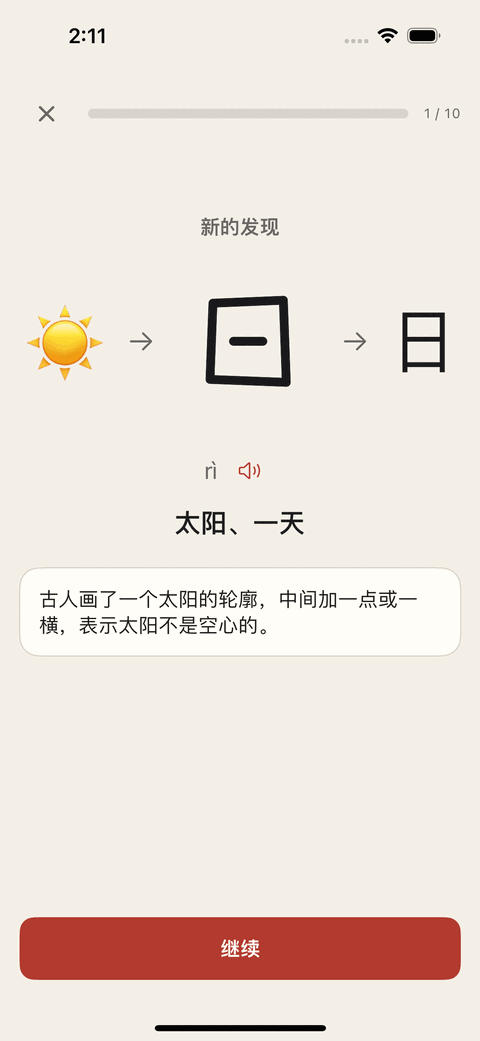
发现:太阳 → 甲骨文 → 日發現:太陽 → 甲骨文 → 日Discover: sun → oracle bone → 日 先把它当作一幅画先把它當作一幅畫Meet it as a picture first
每个字从它画的那样东西开始:太阳、马、手、船。应用先让你猜,再告诉你答案,因为猜过一次的事记得更久。
每個字從它畫的那樣東西開始:太陽、馬、手、船。應用程式先讓你猜,再告訴你答案,因為猜過一次的事記得更久。
Every character starts from the thing it draws: the sun, a horse, a hand, a boat. You guess before you are told, because a guessed fact outlasts a recited one.
-
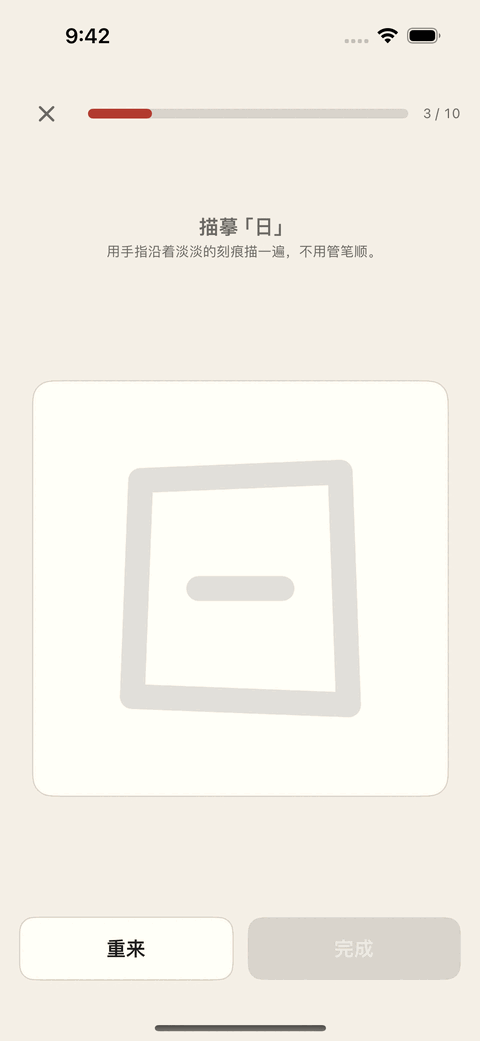
描摹刻痕描摹刻痕Trace the carving 用手指描一遍用手指描一遍Trace it with a finger
顺着淡淡的刻痕描过去,手会记住刀锋转折的地方。应用只看形状覆盖得够不够,不管笔顺,也不会说你写错了。
順著淡淡的刻痕描過去,手會記住刀鋒轉折的地方。應用程式只看形狀覆蓋得夠不夠,不管筆順,也不會說你寫錯了。
Following the faint groove teaches your hand where the knife turned. The app scores how much of the shape you covered — not stroke order — and it never tells you that you are wrong.
-
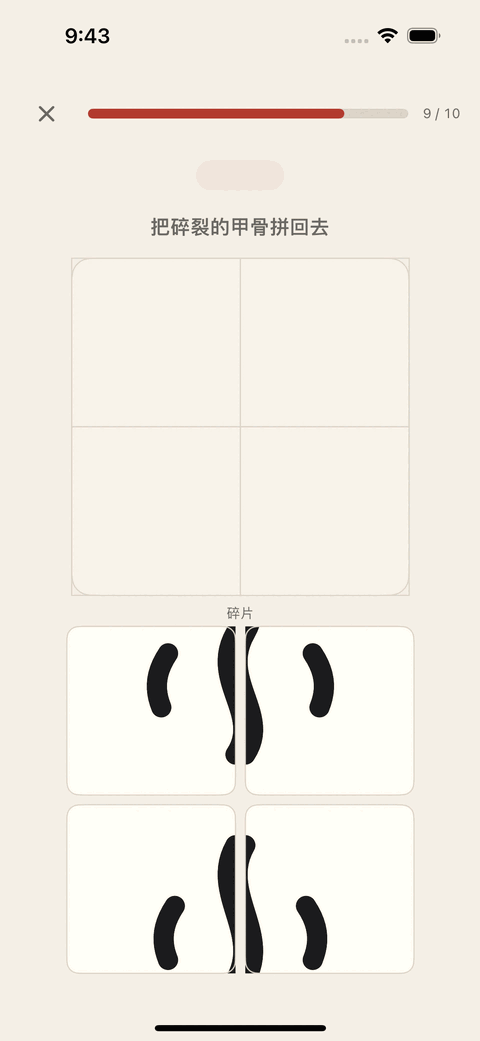
把碎裂的甲骨拼回去把碎裂的甲骨拼回去Put the cracked bone back together 把碎片拼回原位把碎片拼回原位Fit the fragments back
甲骨出土时大多是碎的。把碎片拖回原位,字才重新出现,也才看得清一笔和另一笔的关系。
甲骨出土時大多是碎的。把碎片拖回原位,字才重新出現,也才看得清一筆和另一筆的關係。
Oracle bones usually come out of the ground broken. Drag the pieces home and the character reappears — and you see how one stroke sits against the next.
-
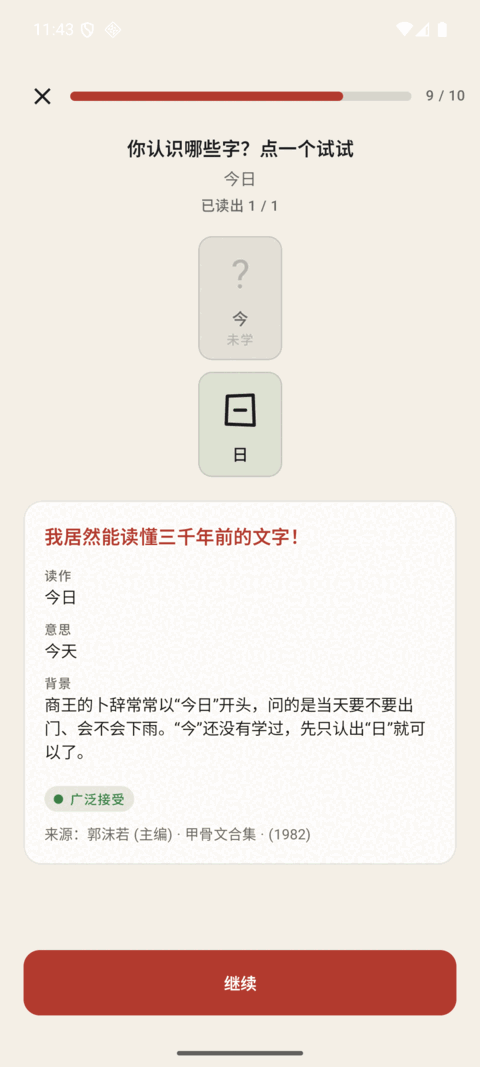
读一条真的卜辞讀一條真的卜辭Read a real divination record 读一条三千年前的卜辞讀一條三千年前的卜辭Read something written 3,000 years ago
每章最后给你一条真实的商代卜辞。认出其中你学过的字,就读懂了当时有人问出口的那个问题:今天会不会下雨,这一旬有没有灾祸。
每章最後給你一條真實的商代卜辭。認出其中你學過的字,就讀懂了當時有人問出口的那個問題:今天會不會下雨,這一旬有沒有災禍。
Every chapter ends on a real Shang divination record. Pick out the characters you have learned and you have read the question someone actually asked: will it rain today, will the coming ten days bring harm.
-
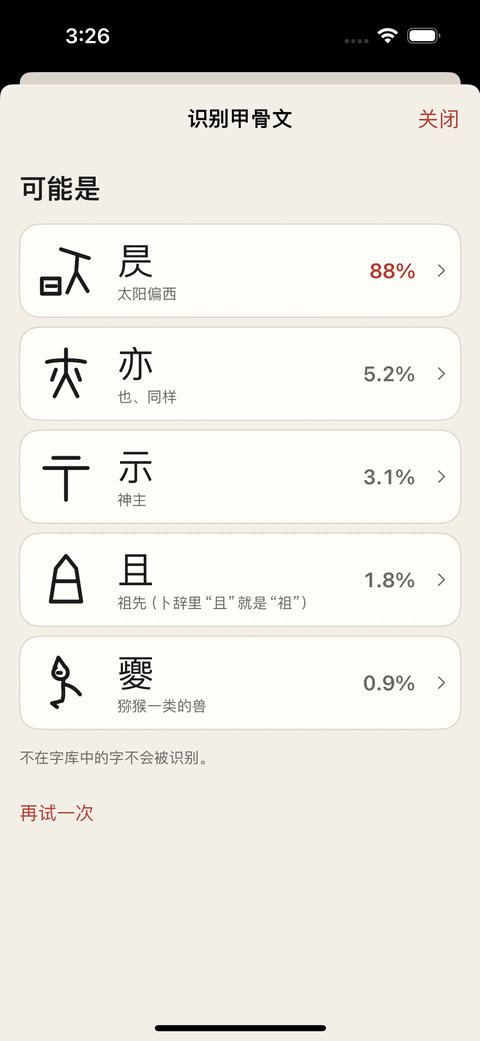
五个候选字,各带把握程度五個候選字,各帶把握程度Five candidates, each with a confidence 对着一个字拍一张對著一個字拍一張Point the camera at a character
在书上、展柜里或屏幕上遇到一个甲骨文字,拍下来或从相册选一张,应用给出最像的五个字和各自的把握程度。识别全在手机上完成,照片不保存、不上传。
在書上、展櫃裡或螢幕上遇到一個甲骨文字,拍下來或從相簿選一張,應用程式給出最像的五個字和各自的把握程度。辨識全在手機上完成,照片不儲存、不上傳。
Meet an oracle-bone character in a book, a museum case or on a screen: photograph it, or pick a picture from your library, and the app offers the five closest characters with a confidence each. It all runs on the phone; the image is never stored and never uploaded.
-
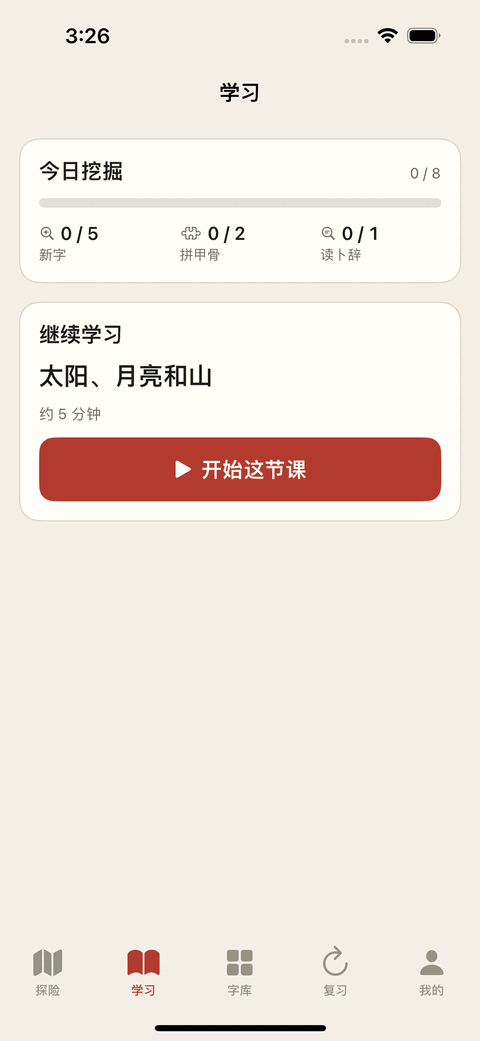
今日挖掘今日挖掘Today's dig 每天挖一次每天挖一次One dig a day
今日挖掘按你自己的进度安排当天的任务:新字、复习、不熟的字、拼甲骨、读卜辞。做完挖到一块文物碎片,六块复原一件文物,一共十二件。
今日挖掘按你自己的進度安排當天的任務:新字、複習、不熟的字、拼甲骨、讀卜辭。做完挖到一塊文物碎片,六塊復原一件文物,一共十二件。
The daily dig sets the day's tasks from your own progress: new characters, reviews, the ones you find hard, a bone puzzle, an inscription. Finish them and you unearth an artifact fragment; six fragments restore one of twelve artifacts.
和别的识字应用不一样的地方和別的識字應用不一樣的地方What makes this different
-
每一个字形都有出处每一個字形都有出處Every form is attested and cited
每一种甲骨文写法都依据中央研究院「小學堂甲骨文資料庫」收录的一片具体甲骨来画,并注明《甲骨文合集》编号、旧著录和类组。不是凭印象画的。
每一種甲骨文寫法都依據中央研究院「小學堂甲骨文資料庫」收錄的一片具體甲骨來畫,並註明《甲骨文合集》編號、舊著錄和類組。不是憑印象畫的。
Every oracle-bone form is drawn after one specific inscription catalogued in Academia Sinica's 小學堂 database, and cites its 《甲骨文合集》 number, its original publication and its diviner group. None of it is drawn from memory.
-
把握程度写在明处把握程度寫在明處A certainty badge, not one confident story
每个字都带一个标记:广泛接受、较可能、学界有争议。有争议的字(帝、王、龙、老……)把几种主要说法都写出来,而不是挑一个讲成定论。
每個字都帶一個標記:廣泛接受、較可能、學界有爭議。有爭議的字(帝、王、龍、老……)把幾種主要說法都寫出來,而不是挑一個講成定論。
Each character carries a badge: widely accepted, probable, or debated. Where scholars disagree — 帝, 王, 龍, 老 — the app names the competing readings instead of choosing one and sounding sure.
-
离线,没有账号離線,沒有帳號Offline, and there is no account
没有服务器,没有统计,没有广告,没有第三方 SDK,也没有网络权限。进度只留在你的设备上。
沒有伺服器,沒有統計,沒有廣告,沒有第三方 SDK,也沒有網路權限。進度只留在你的裝置上。
No server, no analytics, no advertising, no third-party SDKs and no network permission at all. Your progress never leaves your device.
-
三种语言,内容也是三種語言,內容也是Three languages, content included
简体中文、繁體中文、English。不只是界面:每一条解说、每一个提示、每一段字形说明都写了三遍,繁体是写出来的,不是转换出来的。
简体中文、繁體中文、English。不只是介面:每一條解說、每一個提示、每一段字形說明都寫了三遍,繁體是寫出來的,不是轉換出來的。
简体中文, 繁體中文 and English — not just the interface. Every explanation, hint and note is written three times, and the traditional text is written, not transliterated.
-
识别模型装在应用里辨識模型裝在應用程式裡The recognizer ships inside the app
一个 110 万参数的分类器随应用一起安装,认这 300 个字。它给的是猜测,不是答案:一次列出五个候选和把握程度,把握都低时直接说拿不准。
一個 110 萬參數的分類器隨應用程式一起安裝,認這 300 個字。它給的是猜測,不是答案:一次列出五個候選和把握程度,把握都低時直接說拿不準。
A 1.1-million-parameter classifier is installed with the app and knows these 300 characters. It offers guesses, not answers: five ranked candidates with a confidence each, and it says so when nothing scores well.
不确定的地方,就说不确定不確定的地方,就說不確定Where it is unsettled, it says so
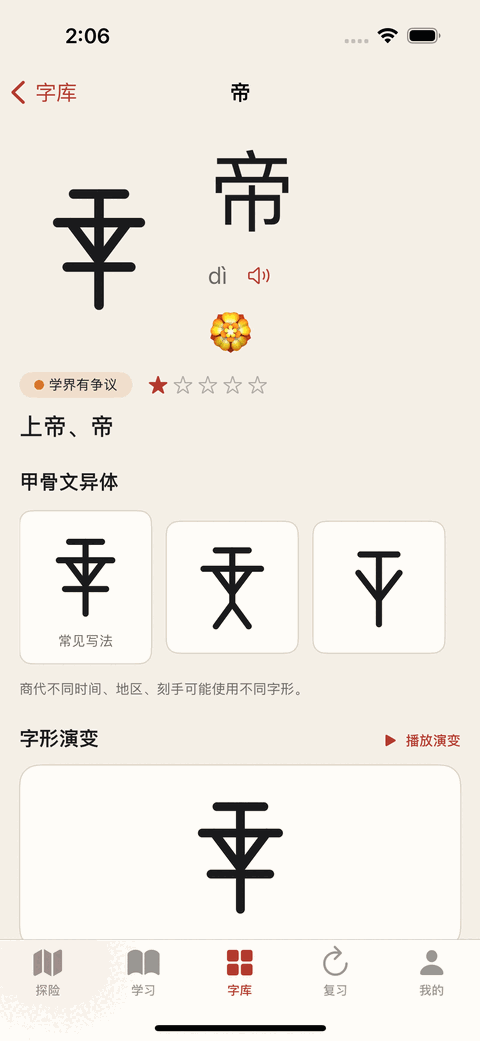
甲骨文研究远没有定论。「帝」画的是花蒂、是捆扎的木柴,还是祭台,几种说法都有人主张。应用不会为了故事好听而挑一个:标记写着学界有争议,解说里把主要的几种读法都列出来。
甲骨文研究遠沒有定論。「帝」畫的是花蒂、是捆紮的木柴,還是祭台,幾種說法都有人主張。應用程式不會為了故事好聽而挑一個:標記寫著學界有爭議,解說裡把主要的幾種讀法都列出來。
Oracle-bone scholarship is far from settled. Does 帝 draw the calyx of a flower, a bundle of firewood, or an altar? All three have been argued. The app does not pick one to make a better story: the badge says debated, and the explanation names the competing readings.
下载下載Get the app
还没有上架。 iOS 版 1.0 已提交 App Store 审核,1.1 也已准备就绪;Android 版尚未发布。上架之后,这里会出现下载链接。
還沒有上架。 iOS 版 1.0 已提交 App Store 審核,1.1 也已準備就緒;Android 版尚未發布。上架之後,這裡會出現下載連結。
Not released yet. Version 1.0 has been submitted to the App Store for review and 1.1 is ready to follow; the Android build is not published. A download link will appear here once it is live.
在 App Store 上获取(iPhone / iPad)在 App Store 上取得(iPhone / iPad)Get it on the App Store (iPhone / iPad)
免费,无内购,无广告。Android 版尚未发布。
免費,無內購,無廣告。Android 版尚未發布。
Free, with no in-app purchases and no advertising. The Android build is not published.
没有账号,没有广告,没有追踪,可离线使用。 应用本身不发起任何网络请求;本网站也不使用 Cookie、不加载任何第三方脚本。详见隐私政策。
沒有帳號,沒有廣告,沒有追蹤,可離線使用。 應用程式本身不發起任何網路請求;本網站也不使用 Cookie、不載入任何第三方指令碼。詳見隱私政策。
No account, no ads, no tracking, works offline. The app makes no network requests at all, and this website sets no cookies and loads no third-party scripts. See the privacy policy.